
Adhoc analysis Vs Posthoc synthesis for a Political Economy
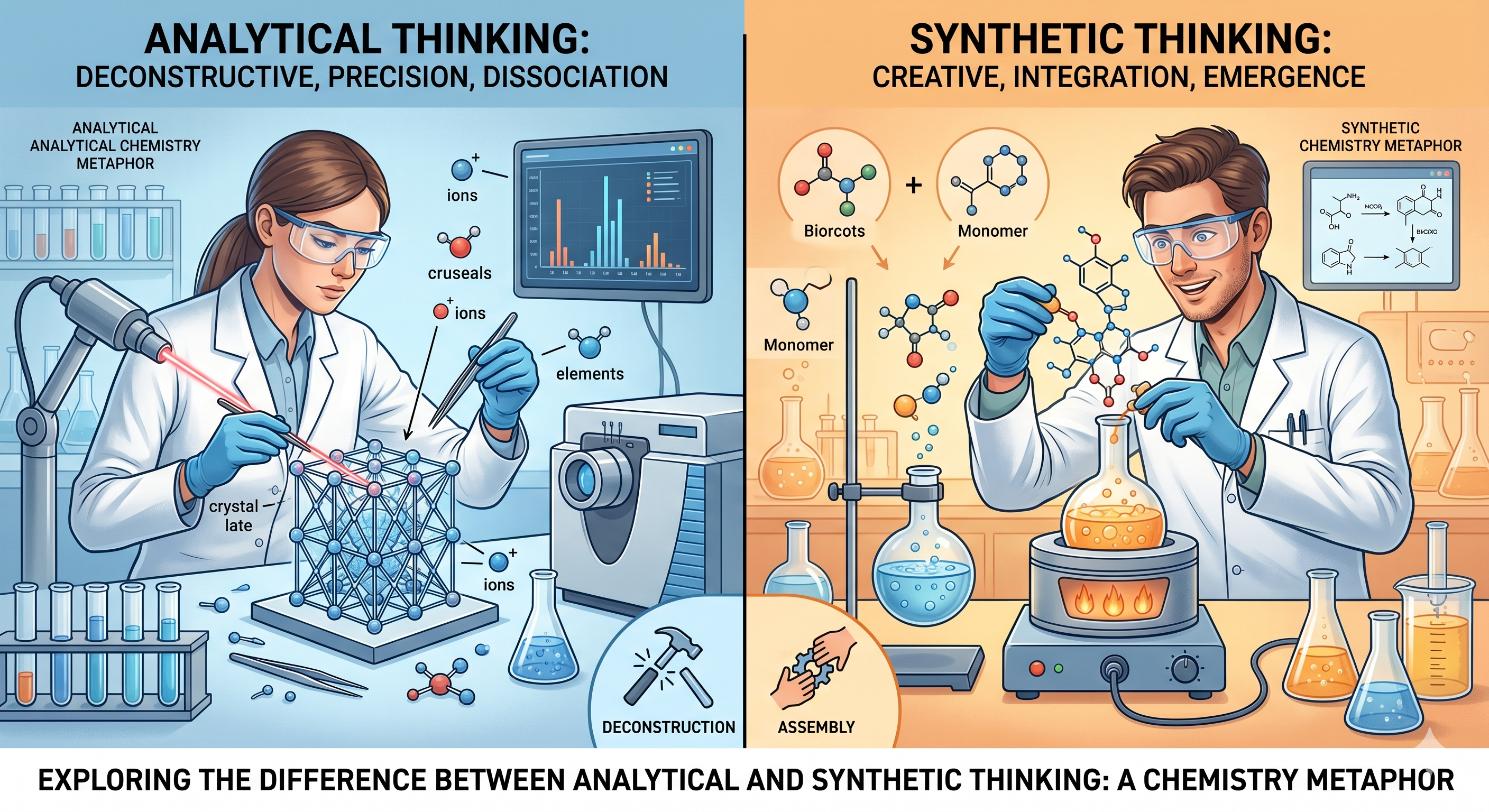
How Kant and Hegel inform Russell Ackoff’s Ad Hoc Analysis and Post Hoc Synthesis
The digital twin manifold on the studio projector was shifting in real-time, its multi-dimensional surfaces twisting to represent a sudden logistics bottleneck in the western corridor. Lucas stared at the screen, his fingers hovering over the simulation controls. Beside him, Sarah was rapidly cross-referencing an anomalies report from the ERP database.
“We need an ad hoc analysis on the component level right now,” Lucas said, pulling up a code fence to isolate the failing nodes. “The simulation is spitting out a variance we didn’t account for.”
Sarah leaned back, looking at the complex web of dependencies. “Be careful, Lucas. You’re diving into an analytical sandbox. It reminds me of what we were discussing yesterday regarding Ackoff’s frameworks. What you are doing right now is fundamentally Kantian, but what we need to solve the long-term mess is Hegelian.”
Lucas paused, looking over at her. “Unpack that. How does Kant map to an ad hoc analysis, and where does Hegel fit into synthesis?”
“Think about what happens when an anomaly hits,” Sarah explained, pointing to the screen. “You immediately perform an ad hoc analysis—meaning ‘for this specific purpose.’ You freeze a single moment in time, isolate the troublesome parts, and tear them down to see how they work. This is the domain of Kant…”
[ THE COGNITIVE SPLIT ]

AD HOC ANALYSIS   ---> Kantian  ---> Structural Breakdown of Appearance (How it works)
POST HOC SYNTHESIS ---> Hegelian ---> Historical Evolution of the Whole Mess (Why it works)
“Okay,” Lucas said, tracking her logic. “I’m using Kantian structures to analyze the mechanics of the current breakdown…”
“Right,” Sarah replied. “And true synthesis cannot be neatly planned out ahead of time… This is where Hegel comes in…”
Lucas turned back to the glowing simulation. “Are simulations always ad hoc? Or are all ad hoc analyses always a simulation?“
Sarah leaned forward. “Let’s clarify the taxonomy:”
- Are simulations always ad hoc? No. A simulation can be continuous infrastructure.
- Are all ad hoc analyses always a simulation? No. Many analyses require no simulation.
- Which is the larger concept? Ad hoc analysis is broader.
┌──────────────────────────────────────────┐
│            AD HOC ANALYSIS               │
│  (Any immediate, targeted investigation) │
│                                          │
│    ┌──────────────────────────┐          │
│    │        SIMULATION        │          │
│    │ (Generative modeling for │          │
│    │     specific what-ifs)   │          │
│    └──────────────────────────┘          │
└──────────────────────────────────────────┘
“Can synthesis always be done post hoc?” Lucas asked.
“Deep synthesis is almost inherently post hoc,” Sarah said…
“Then where does our simulation sit? Is it analysis or synthesis?”
Sarah smiled. “It’s a paradox. A simulation is an ad hoc synthesis built for analytical interrogation.”
The Simulation Paradox:
A simulation constructs a dynamic mini-universe (synthesis), but exists to answer targeted what-if questions (analysis).
“We build a synthetic sandbox to mimic the Hegelian whole,” Lucas said, “just so we can apply Kantian analysis.”
“Exactly,” Sarah replied.
Given how these frameworks illuminate the tension between immediate analytical troubleshooting and long-term systemic design, would you like to explore how this distinction applies to enterprise architectures like SAP S/4HANA or Palantir?
Suggested Citation
Kant Research. "Adhoc analysis Vs Posthoc synthesis for a Political Economy". Published 2026. Accessed October 2026.