
Part II: How India Preserves Nehru and Gandhi
When a post-colonial republic attempts to graft an egalitarian democratic ideal onto a deeply stratified civilizational soil using the mechanical tools of Western political economy, it unleashes Karl Popper’s chilling prophecy: the Oedipus Effect, wherein an intentional institutional intervention reflexively alters reality to bring about its exact antithesis. India’s modern political economy has been trapped in this recursive loop, enduring two sequential and devastating structural inversions. Striving to escape the scars of colonial extraction, the republic anchored its trajectory in distinct governance paradigms, ranging from the pre-liberalization cooperative socialist experiment to the post-liberalization market expansion. In every era, the fundamental error remained identical: attempting to engineer collective well-being while retaining the ontological illusion of the isolated integer, bound invisibly to the Hobbesian-Lockean architecture of threat and trade.
The First Oedipus Effect: The Cooperative Movement and Neo-Feudal Plunder
In the decades following independence, India’s architects sought to bypass the bloody polarization of Soviet collectivism and Western capitalist atomization by championing a massive cooperative movement. Envisioned as a vital instrument of grass-roots integration, the cooperative was designed to pool resources, elevate the rural masses from defenseless economic integers into a self-governing collective, and democratize ownership over capital. Yet, this noble vision collided headlong with the ruthless mechanics of the tragedy of the commons. Entrusted with public common pools and communal resources, local directors, agrarian elites, and political intermediaries quickly shed their egalitarian rhetoric, reverting to the psychological instincts of feudal lords. They treated shared assets as private spoils, looting the cooperative infrastructure for personal accumulation and local dominance.
Herein lay the first great Oedipus Effect: an institutional framework explicitly designed to foster economic democracy and community integration ended up deepening rural stratification and concentrating local power. When the young egalitarian democracy attempted to digest this neo-feudal rot, the systemic contradictions tore the cooperative movement apart from within, breeding profound cynicism and leaving the rural producer more vulnerable than before. The intervention generated the very hierarchical abuse it was deployed to eradicate.
The Trap of the Unearned Gift: Gandhi, Nehru, and the Rejection of Unearned Modernity
At the philosophical heart of India’s early nationalist imagination lay a profound intuition regarding grace, the unearned gift. In its theological and moral sense, grace is a free, unmerited bestowing of life and redemption. But in the geopolitical and economic arena, the “unearned gifts” offered by Western modernity, pre-packaged industrialism, consumer opulence, centralized credit, and technological shortcuts, carry a hidden, predatory mortgage.
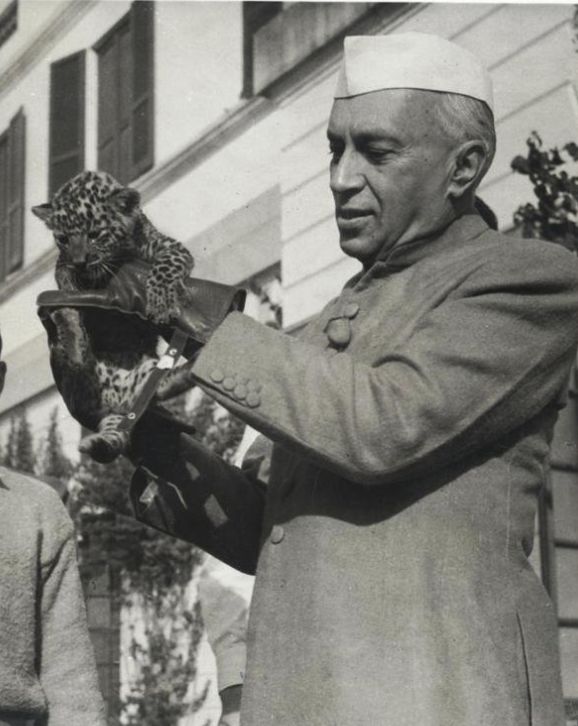
Mahatma Gandhi and Jawaharlal Nehru, despite their starkly different temperaments, shared a foundational dread of accepting these unearned gifts from the West. Gandhi’s gospel of Swadeshi (self-reliance) and Swaraj (self-rule) was built on the absolute premise that a nation cannot borrow its soul or purchase its liberation; true dignity requires indigenous labor, moral austerity, and organic rootedness (integrare). The spinning wheel (charkha) was not merely an economic tool; it was a physical rejection of the unearned, extractive luxuries of Manchester, insisting that a people must weave their own destiny from the ground up. Nehru, too, though enamored with state-led heavy industrialization, sought strategic economic autonomy so India would never again be reduced to a tributary state of foreign capital. They both understood that for India to remain a sovereign civilization, it had to reject the seductive, unearned shortcuts of Western modernity, knowing that any society that accepts a gift it has not earned surrenders its independence to the giver.
The Second Oedipus Effect: Post-Liberalization, Financialization, and the Trading of Labor for Unearned Modernity
Following the 1991 economic crisis, post-liberalization India committed the ultimate betrayal of this foundational wisdom. It systematically sabotaged the spirit of self-reliance by engaging in a Faustian bargain: trading millions of human labor hours for the hollow, unearned modernity of global consumerism.
Instead of building an indigenous, self-sustaining economic matrix anchored in local production, the republic threw open its doors to transnational capital, exchanging the sweat, time, and vital energy of its population for cheap credit, digital gadgets, and westernized lifestyle fantasies. This surrender was brutally compounded by financialization. Human labor was no longer merely exploited in traditional physical workshops; it was abstracted, securitized, and traded as speculative derivative products on global financial ledgers.
Consequently, ownership over capital concentrated with terrifying velocity into the hands of a microscopic corporate oligarchy. The Indian farmer, historically romanticized as the moral anchor of the nation, was severed from capital entirely, buried under unsustainable debt, and reduced to a precarious, disposable integer in an extractive global supply chain. This dispossession metastasized into the urban and digital economy, institutionalizing a quiet, pervasive workplace slavery. In the frantic rush to validate the private-property ideals of Locke and the zero-sum survival dynamics of Hobbes, modern Indian workplaces normalized a profound dehumanization. Whether in the glass towers of corporate tech hubs or the algorithmically governed gig-economy sweatshops, human beings are treated as disposable Bestand, raw standing-reserve to be monitored, optimized, and burned out. The glorification of 70-hour workweeks and the normalization of psychological precarity are reframed by technocratic managers as virtues of grit, proving that when a nation trades its labor for unearned modernity, it ends up purchasing its own chains.
India’s tragedy lies in its refusal to look beyond the false binary of state bureaucracy and market predation. By treating the nation as an aggregate of competing integers and measuring progress through the accumulation of abstract capital rather than organic integration, every policy reform has only tightened the algorithmic noose. Until the republic dares to abandon the Hobbesian-Lockean operating system and reclaim the rigorous path of indigenous self-reliance, every defense of institutional integrity will merely accelerate the fulfillment of the prophecy, proving that when a civilization tries to buy its freedom using the currency of its own enslavement, it seals its submission to the modern Leviathan.
Suggested Citation
Kant Research. "Part II: How India Preserves Nehru and Gandhi". Published 2026. Accessed October 2026.